
Roof Problems in West Michigan
Roof Hail Damage: What It Does & How To Spot It
West Michigan sits squarely in hail country. Spring and summer thunderstorms rolling off Lake Michigan regularly drop hail on Grand Rapids, Holland, and the lakeshore, and the damage is almost never obvious from the driveway.
This page explains what hail actually does to a roof, what to look for after a storm, what a real hail inspection involves, and why the person who inspects your roof has a lot to do with whether the claim covers what the roof actually needs.
What Hail Actually Does To Your Roof
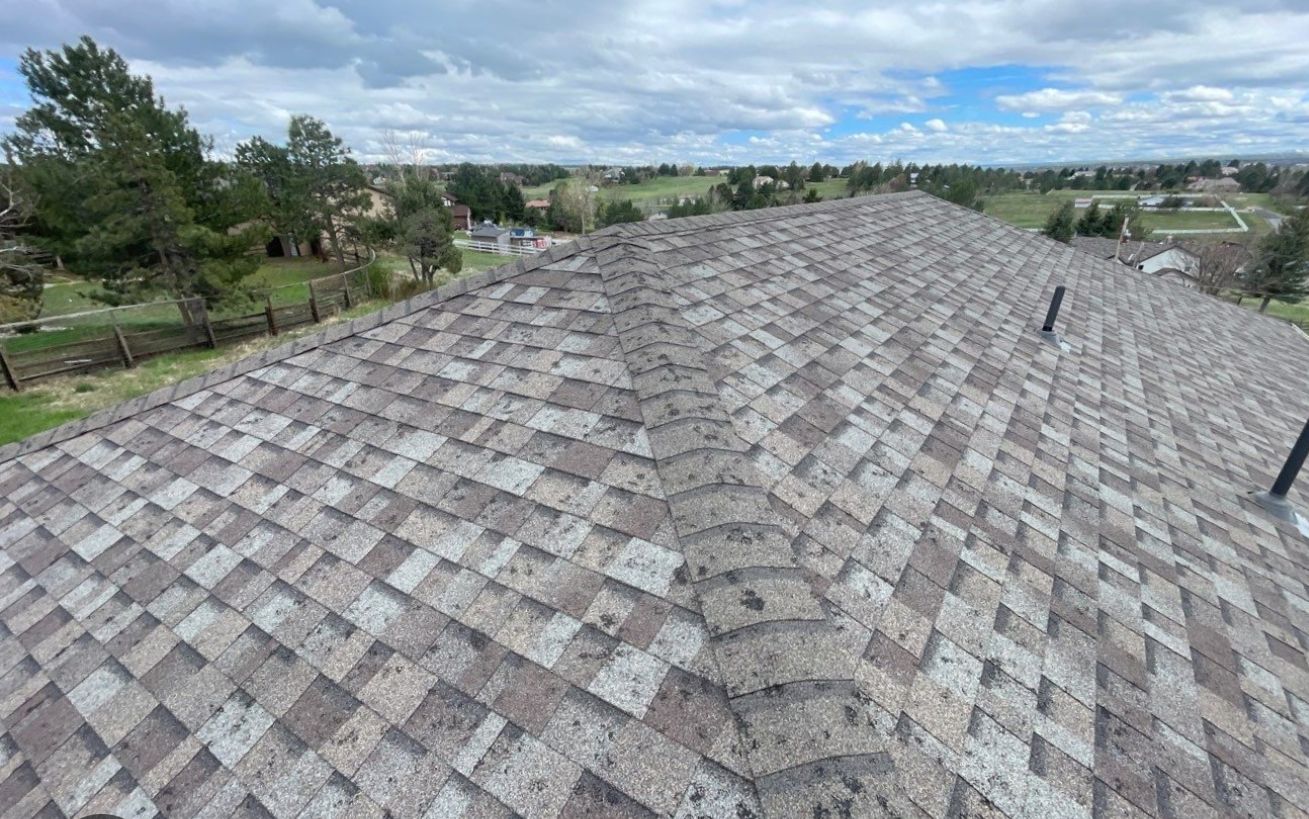
Hail damage is deceptive. A stone doesn't have to punch a hole through your roof to take years off its life. When a hailstone hits an asphalt shingle hard enough, it can do two things. It knocks the protective mineral granules loose, exposing the asphalt underneath to the sun. And it can fracture the fiberglass mat inside the shingle, which is what the industry calls a bruise. That fracture is the real damage. The shingle still looks whole, but its structure is broken, and it will start to fail from that spot.
In West Michigan the damage compounds. A shingle bruised in a July storm develops hairline cracks over the fall. Come January, water gets into those cracks, freezes, expands, and pries them open. Invisible summer hail turns into an active winter leak, and by then most homeowners never connect the leak to the storm that caused it.
Hail size matters, but it isn't the whole story. Larger stones do more damage, and West Michigan sees quarter-size to golf-ball-size hail most summers, especially along the lakeshore. But whether a given storm caused functional damage to a given roof depends on the roof's age and condition, the pitch, which slopes faced the storm, wind speed, and how long it lasted. A brittle twenty-year-old roof can bruise from stones that bounce off a five-year-old one. That's why we don't tell you what happened to your roof until we've been on it.
How To Spot Hail Damage
Some signs you can see from the ground. The one that matters most, you can't.
Dented Metal and Soft Collateral
Start here. Gutters, downspouts, roof vents, valley flashing, metal fascia, window screens, AC fins, siding, deck paint, mailboxes. Soft metal shows hail clearly, and dings on the metal around your house are the fastest way to confirm a storm hit hard enough to matter. If the metal is clean, the roof probably is too.
Granule Loss
Hail can knock granules off, exposing dark asphalt underneath. Watch for dark spots on the slopes and a sudden pile of grit at the bottom of the downspouts right after a storm.
Cracked or Split Shingles
Larger stones crack shingles outright or leave circular impact marks with fractured edges.
Interior Stains
Fresh water stains on ceilings or in the attic weeks or months after a storm can trace back to hail-fractured shingles that finally let water through during the next hard rain.
Bruising, the Sign That Actually Matters
This is the one that decides a claim, and it's the one you can't confirm from the ground. A true hail bruise is a fracture in the shingle mat under an impact point. It often feels soft, but soft spots also come from blisters, foot traffic, and manufacturing variation, so a soft spot by itself proves nothing. Haag Engineering, whose certification our inspectors hold, has published guidance on distinguishing true hail bruising from surface conditions that only look like it. Telling the difference is a trained call, made on the roof, and it's exactly what an adjuster is going to look for.
Don't climb a wet, steep, or storm-damaged roof to check yourself. Look at what you can see safely from the ground, then let someone trained get on the roof.
What a Real Hail Inspection Involves
Our inspectors are Haag Certified in hail and wind damage assessment for residential and commercial roofs. We are one of the few roofing companies in Michigan whose inspectors hold that certification. Here's what that inspection looks like, because it's not a walk-around with a clipboard.
- We start with the roof itself: manufacturer, product, age, pitch, orientation, layers, and existing condition, because a twenty-year-old roof and a five-year-old roof respond to the same storm differently.
- We check the collateral: every soft metal on the property, because that's what tells us how hard the storm hit and from which direction.
- We lay out test squares on each slope, document the location, count and photograph every mark, and examine the mat under each one, not just the surface. We separate hail bruising from blisters, foot traffic, mechanical damage, and age.
- We correlate what we find with the storm: date, reported hail size, direction. If it doesn't line up, we say so.
- Then we write it up: photos, marks per square by slope, collateral damage, and a scope of what the roof needs. That document is what you and your adjuster work from.
We do all of that before we say the word "hail" to your insurance company, because our name goes on the report.
Hail Damage & Your Insurance
Hail damage is one of the most commonly covered roof claims in Michigan. Most homeowners policies cover repair or replacement of a roof damaged by hail. Two things to know.
Your policy sets the deadline. Every policy has a window for reporting a claim, and it's often shorter than people expect. Read yours now, not after the storm. And the longer you wait, the harder it is to tie the damage to the event.
The scope is where claims are won or lost. A hail claim isn't just "the roof was hit, replace it." It's a line-by-line scope of everything the roof needs to be put back to code and to manufacturer spec: shingles, underlayment, ice and water shield, starter, ridge cap, drip edge, flashing, ventilation, tear-off, disposal. When a homeowner files alone, the scope is usually whatever the adjuster saw in the time he was on the roof, and the expensive items are the ones that get missed. When a Haag Certified inspector has already documented the roof and written the full scope, the adjuster is working from a complete picture. In our experience, that difference shows up in the number.
Here's how the process works:
- 1Note the storm date and, if you can, the reported hail size.
- 2Photograph collateral damage from the ground: gutters, downspouts, siding, screens, AC.
- 3Get a professional inspection and written documentation before you call your insurer.
- 4File the claim. Your carrier assigns an adjuster.
- 5We meet the adjuster on the roof, walk him through what we documented, and answer questions on the scope. We don't negotiate your claim, that's between you and your carrier, but we make sure he's seeing what we saw.
- 6Once the claim is approved, we complete the work to the approved scope and to code, and handle the paperwork on our end.
What To Do After a Hailstorm
- Note the exact date of the storm
- Photograph gutters, downspouts, siding, and AC from the ground
- Check the attic and ceilings for stains
- Schedule a professional hail inspection
- Read your policy for the claim deadline
- Do not sign anything with a door-knocking storm chaser
After a big storm, out-of-state storm chasers flood West Michigan neighborhoods. Many are gone once the check clears, and the warranty goes with them. Some will push you to sign a contract on the porch before anyone has been on the roof. Don't. Stellar Roofing Company is 100 percent West Michigan owned, we've been here since 2012, and we'll be here after the storm season ends.
Once damage is confirmed, our hail damage roof repair service restores the roof, and if wind came through with the hail, our storm damage team handles the full picture. Start with a free inspection or call (616) 840-1927.
Confirmed Damage? Here's Where To Go
Hail Damage Roof Repair
Ready to fix confirmed hail damage? See our repair and restoration service.
Learn MoreStorm Damage Roofing
Hail rarely travels alone. Wind and debris damage, documented and repaired.
Learn MoreInsurance Roof Claims
How roof insurance claims work in Michigan, from filing to final payout.
Learn MoreFree Roof Inspection
Not sure if you were hit? Book a free hail inspection with our team.
Learn MoreRoof Hail Damage Questions
How can I tell if my roof has hail damage?
From the ground, look at the metal: dents in gutters, downspouts, vents, flashing, screens, and AC fins are the clearest sign a storm hit hard enough to matter. Dark spots on the shingles and a sudden pile of granules at the downspouts after one storm are also clues. The damage that decides a claim, fracturing in the shingle mat, can only be confirmed on the roof by someone trained to tell hail bruising from blisters, foot traffic, and age.
What size hail damages a roof?
It depends on the roof as much as the hail. Larger stones do more damage, and West Michigan regularly sees quarter-size to golf-ball-size hail in spring and summer. But an old, brittle roof can bruise from stones a newer roof would shrug off, and pitch, orientation, and wind all factor in. A Haag Certified inspection determines what actually happened to your roof, which is what your carrier will want to know.
Does hail damage always cause an immediate leak?
No, and that's what makes it dangerous. Hail often fractures the shingle mat without breaking through right away. In West Michigan, freeze-thaw then turns those hairline cracks into leaks months later, which is why homeowners often can't connect a winter leak to the summer storm. Catching it early is what prevents that.
Will my insurance cover hail damage to my roof?
Most Michigan homeowners policies cover roof repair or replacement caused by hail. Coverage and the claim deadline are set by your policy, so read it. What we can control is documentation: a Haag Certified inspection and a written scope before you file, and a walkthrough with your adjuster on the roof, so the claim reflects what the roof actually needs.
Why should I have a roofer inspect before I file, instead of just calling my insurance company?
Because the scope is where the money is. An adjuster typically has limited time on your roof, and a claim filed with no prior documentation gets scoped from what he saw in that window. The items that get missed are the expensive ones: ice and water shield, starter, ridge cap, drip edge, flashing, code-required ventilation, full tear-off and disposal. A Haag Certified inspector who has already documented the roof and written the full scope hands the adjuster a complete picture. In our experience that difference is real, and it's the difference between a roof that's put back right and one that's put back cheap.
Should I fix hail damage myself?
No. Don't climb a storm-damaged roof, and DIY patches can void warranties and complicate a claim. Have a professional document the full scope of damage before anything is touched. Once confirmed, our hail damage repair service restores the roof correctly and handles the paperwork on our end.
What This Page Cites
- Haag Engineering, "Hail Damage to Asphalt Roof Shingles." haagglobal.com