
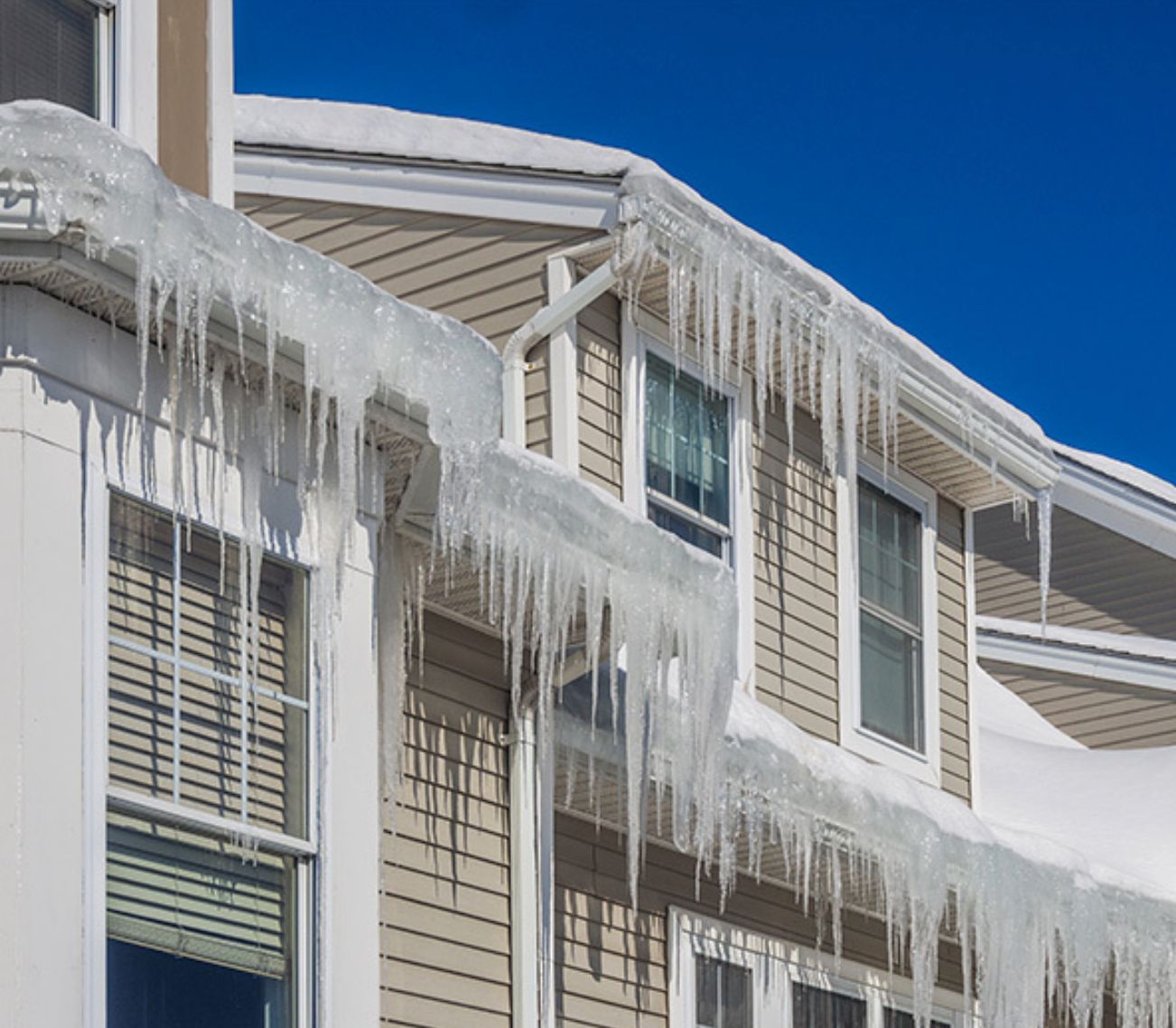
Roof Problems in West Michigan
Ice Dams on Your Roof
Few winter roof problems are as sneaky, or as damaging, as an ice dam. That thick ridge of ice along your eaves looks harmless. It's quietly forcing water back under your shingles and into your house.
Between lake-effect snow, long stretches below freezing, and the freeze-thaw swings that define a West Michigan winter, ice dams are the number one cause of winter roof leaks we see across Grand Rapids, Holland, Ada, and the surrounding communities. And here's the part that surprises people: they're almost never a roof problem. They're a physics problem, and it starts in the attic.
What Is an Ice Dam?
An ice dam is a wall of ice that forms at the edge of a roof and stops melting snow from draining off the way it should. Instead of running into the gutters and away from the house, meltwater pools behind the ice, backs up, and works its way under the shingles. Water always takes the path of least resistance. Once it's under the shingles, that path is straight down into your attic, your ceilings, and your walls.
How Ice Dams Form in a West Michigan Winter
Physics is physics. Here's the cycle.
- Step 1
Heat Rises Into the Attic
Warm air from the living space leaks up into the attic. Even in a house with decent insulation, heat also moves by conduction straight through the framing members and the structure to the roof deck above. The result is a roof deck that's warmer than the air outside.
- Step 2
Snow Melts From Below
Snow only has to reach 33 degrees to melt. A roof deck warmed from underneath does that easily, even when the outside air is in the teens. So the bottom layer of snow on the upper roof melts and starts running downhill, under the snowpack, where you can't see it.
- Step 3
Meltwater Refreezes at the Eave
The water runs down to the overhang, the part of the roof that hangs past the heated house and sits over open air. That deck is cold. The water refreezes almost instantly. That's your icicle, and it grows every time the cycle repeats.
- Step 4
A Dam Forms and Water Backs Up
On top of the roof, the ice builds into a ridge along the eave. New meltwater hits the ridge, has nowhere to go, and backs up under the shingles. Shingles are built to shed water running down. They are not built to hold water running up. So it goes through.
In our climate this cycle can repeat dozens of times a winter. A sunny afternoon in the low 30s followed by a single-digit night is the perfect recipe, and it happens over and over from December through March. Some roofs are far more prone to it than others: low pitches, north-facing slopes, roofs with valleys or dormers that concentrate the meltwater, and any roof over a kitchen or bathroom pumping warm, wet air into the attic.
Warning Signs of an Ice Dam
You don't need to climb a snowy roof to catch this early. From the ground and inside the house, watch for:
- A thick ridge of ice along the eaves or gutters
- Large icicles hanging from the roof edge, especially icicles the size of your arm
- Water stains or discoloration on upstairs ceilings and exterior walls
- Damp spots or dripping around exterior walls after a thaw
- Snow that melts in patches, leaving bare streaks up the roof while the eaves stay white
- Peeling paint or moisture near window and door frames
- Sagging or overflowing gutters weighed down by ice
Icicles are the tell. Big icicles mean the roof deck above them is warm enough to melt snow while the eave is cold enough to freeze it. That's the exact condition that builds a dam. If you see interior water, don't wait for spring. Winter leaks rot decking and ruin insulation fast. Call us and we'll find the entry point and stop the water.
Damage Ice Dams Can Cause
One winter of ice damming can mean repairs across the roof, the attic, and the interior.
Interior Water Damage
Backed-up water seeps past the shingles and drips into ceilings, walls, insulation, and light fixtures, often showing up as brown stains far from the roof edge.
Rotted Roof Decking and Framing
Repeated saturation rots the plywood or plank deck, the fascia, and the rafter tails. We've rebuilt entire roof sections over a kitchen because of ten winters of this. See it in our gallery.
Ruined Insulation
Wet insulation loses its R-value and stays damp, which makes the attic warmer, which makes the ice dam worse next year, and invites mold.
Torn Gutters and Fascia
Heavy ice pulls gutters loose, bends hangers, and tears at the fascia.
Shingle and Flashing Failure
Water trapped under shingles lifts and cracks them, and freeze-thaw works every joint and flashing loose over the winter.
Dangerous Icicles
The same conditions that build dams build the icicles, and a falling icicle is a real hazard for people and pets underneath.
How to Prevent Ice Dams
The rule is simple: in winter, you want the roof deck as close to the outside temperature as possible. If the deck stays cold, snow melts evenly from the top when the sun's out and drains off, and there's no dam. Everything below is about getting the deck cold and keeping it that way.
Attic Insulation
Insulation slows the heat moving from the house up to the roof deck. In Michigan the recommendation is around R-60 for the attic floor. Past that you're at diminishing returns. Most older West Michigan homes are nowhere close, and a lot of the ones that were insulated well have had the insulation compressed, disturbed, or soaked over the years. We check depth and condition on every winter inspection.
Air Sealing
Insulation slows heat. It doesn't stop air. Warm air leaking through can lights, bath fans, attic hatches, and gaps around chimneys and plumbing chases carries heat and moisture straight into the attic. Sealing those is the cheapest ice dam fix there is.
Balanced Ventilation
This is the one most roofs get wrong. You want a constant flow of cold outside air coming in low, at the soffits or eaves, and pushing warm air out high, at the ridge. Intake and exhaust have to be balanced. Too much exhaust and not enough intake just pulls conditioned air out of the house. No intake at all, which is common on older homes with no soffit or with soffit vents painted over, and the attic can't breathe. Warm air pools against the deck and the melt cycle starts. Poor airflow is the single biggest ice dam cause we find, and it's the first thing we look for.
Ice and Water Shield
A self-sealing waterproof membrane installed at the eaves and valleys, under the shingles. It's a backstop, not a fix. If water does back up behind a dam, the shield keeps it off the deck. Building code in Michigan requires it at the eaves on new roofs because of our climate, and it has to extend far enough up the roof to get past where the dam actually forms, which on a low pitch or a deep overhang can be well beyond the minimum. We've torn apart plenty of roofs where the shield stopped six inches short of the ice line.
Snow Removal
On roofs that are prone to ice dams, managing the snow load matters. Less snow on the roof means less meltwater feeding the dam. Stellar offers snow and ice removal from roofs, and only roofs, using methods that don't damage the shingles. If you get a dam every year and the permanent fix isn't in the budget yet, this is how you get through the winter without a leak.
Roof Snow & Ice RemovalBecause so many ice dams trace back to airflow, fixing attic ventilation is usually the single most effective long-term step. And a maintenance visit before winter lets us clear gutters, check the shield, look at the insulation, and catch weak spots before the snow flies.
Don't Chip Away at Ice Dams Yourself
Hammers, hatchets, and roof salt almost always damage the shingles underneath, and climbing an icy roof in a Michigan winter is dangerous. If an ice dam is already leaking into your house, call us. We'll safely get the water off the roof and plan the ventilation or repair fix that keeps it from coming back.
(616) 840-1927What to Do About an Ice Dam
If you're dealing with ice dams every winter, treating the symptom won't stop them. The fix is correcting why your roof is melting unevenly. We inspect the roof and the attic together, then walk you through the options, whether that's a targeted repair, a ventilation upgrade, or a snow management plan to get you through this winter.
- Watch for interior water and act on leaks right away
- Keep the ground below icy eaves clear for safety
- Skip the hammer, the salt, and the DIY roof climb
- Call for roof snow and ice removal if the dam is active
- Book a professional roof and attic inspection
- Fix the ventilation, air sealing, and insulation at the source
- Confirm ice and water shield coverage before next winter
Ice Dam Questions, Answered
Why does my West Michigan home get ice dams every winter?
Repeat ice dams almost always mean a warm roof deck and a cold eave. Heat from the living space, moving up through the attic and through the framing, melts snow on the upper roof, and that meltwater refreezes at the overhang. Our lake-effect snow and constant freeze-thaw make the cycle repeat until the attic and ventilation issues are corrected.
Are ice dams a roof problem or an attic problem?
The ice is on the roof. The cause is in the attic. Heat loss and poor airflow keep the roof deck warmer than the eaves, and that temperature difference is what builds the dam. A lasting fix is air sealing, insulation to around R-60, and balanced soffit-to-ridge ventilation, not new shingles.
Can an ice dam damage the inside of my house?
Yes. Water backing up behind the dam works under the shingles and drips into ceilings, walls, insulation, and light fixtures. Left through a winter, it rots decking and fascia, ruins insulation, and creates conditions for mold. Interior water stains should never be ignored.
Should I try to remove an ice dam myself?
No. Chipping at ice with tools damages shingles, roof salt corrodes metal and shortens roof life, and climbing an icy roof is dangerous. If a dam is leaking, call us. We do snow and ice removal from roofs, and we'll plan the permanent fix at the same time.
How does ice and water shield help with ice dams?
Ice and water shield is a self-sealing waterproof membrane installed at the eaves and valleys under the shingles. It's a backup barrier so that even if water backs up behind a dam, it can't reach the deck. Michigan code requires it on new roofs, but many older homes lack it or have too little of it, and on low pitches and deep overhangs even the code minimum can stop short of where the dam forms.
How can I keep ice dams from forming next winter?
Keep the roof deck cold. Seal attic air leaks, bring the insulation up to around R-60, and make sure intake at the soffit and exhaust at the ridge are balanced so warm air flushes out. On roofs that are prone to it, plan for snow removal after big storms. A maintenance visit before winter lets us check all of it before the snow arrives.